
Habi Rahman: Nearly Five Years in Prison and a Long Journey to Reunite with His Wife
After nearly five years in prison and years of separation, 69-year-old Habi Rahman reunited with his wife in Bangladesh, carrying memories of loss and hope for a safe return home.
A Peaceful Life Before 2016
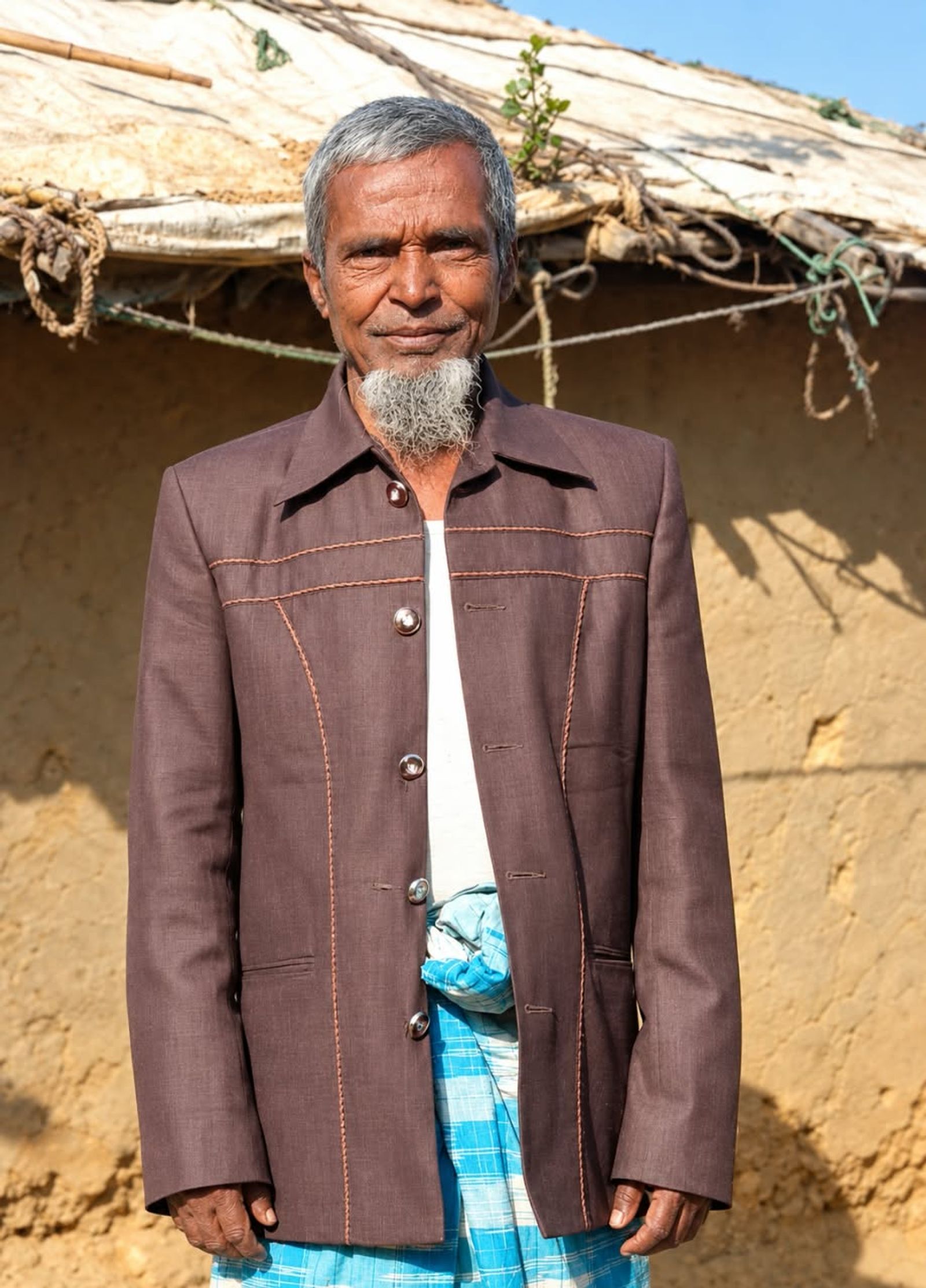
Habi Rahman, 69, lived in Powit Phyu Chung village in Maungdaw Township, Rakhine State, Myanmar. Like many villagers, he worked hard to support his family. He cultivated rice and vegetables on his land, his main source of income, and regularly employed two workers throughout the year. He also earned additional income by growing betel nuts at home.
He remembers his life before November 2016 as peaceful and happy. He had his family, land, home, and livelihood. Through his work, he could provide for his wife and family.
But on 12 November 2016, that life changed. What followed was years of imprisonment, separation, and uncertainty.
The Attack That Separated His Family
On the morning of 12 November 2016, Habi returned home after performing his Fajr prayer. Shortly afterwards, he heard gunshots coming from the northern part of the village.
He saw Myanmar military personnel approaching and setting houses on fire. Frightened and unsure what to do, he told his family to leave their shelter and take whatever they could carry.
Habi and nearby villagers fled towards another village in search of safety. As they made their way along the village road, he saw his own home burning.
At a three-way junction, military personnel stopped the villagers and separated the men from the women, girls, and children. Habi and the other men were held at the junction, while the families were ordered to leave without them.
Families cried and shouted as husbands, fathers, and other male relatives were separated from them. The military then fired a shot and threatened to kill them if they did not leave.
Habi's wife and other family members went to a nearby village to seek shelter. Habi remained at the junction with the other men, separated from his family and uncertain about what would happen to him.
Arrest, Torture, and Nearly Five Years in Prison
The Myanmar military kept Habi and the other men at the junction for one day and one night. On 13 November 2016, they were taken to Maungdaw.
According to Habi's account, before being sent to prison, he was beaten for more than three days and deprived of food and water. He was later transferred to Buthidaung Prison, where he experienced further torture.
During his imprisonment, his greatest concern was his wife. He did not know where she was, how she was surviving, or who was supporting her. He had no way to communicate with his family.
Although his two daughters were already married, he remained deeply worried about his wife and her circumstances. For years, he lived without knowing whether he would ever see his family again.
On 11 October 2021, Habi was released from prison. According to the information he shared, the other detained villagers were also released. After nearly five years in detention, he was finally able to return to his village.
Returning Home to Find Only Ruins
After his release, Habi returned to Powit Phyu Chung, hoping to find his wife and reunite with his family.
Instead, he found his home reduced to ashes. The place where he had built his life, supported his family, and lived peacefully had been destroyed.
According to his account, only around 12 to 15 families remained in the village.
Habi began asking the remaining villagers whether they knew where his family had gone. After three days, he learned that they were living in a refugee camp in Bangladesh.
Knowing where his family was brought some hope, but finding a way to contact them was another challenge. After years without communication, he struggled to reach them. Despite the difficulties and communication barriers, he eventually managed to make contact.
The Decision to Cross into Bangladesh
After reconnecting with his family, Habi initially hoped to bring his wife back to their village and rebuild their home. He wanted to restore the life they had shared before 2016.
However, he found that conditions remained difficult, with continued arrests, detention, and restrictions. He believed that returning to the village would not allow him and his wife to live safely.
He eventually made the difficult decision to cross the border into Bangladesh and join his family in the refugee camp.
Despite the challenges along the way, he completed the journey. After years of imprisonment, uncertainty, and separation, Habi finally saw his wife again.
Together Again, but Facing New Hardships
Reuniting with his wife brought an end to years of separation, but it did not end their struggles.
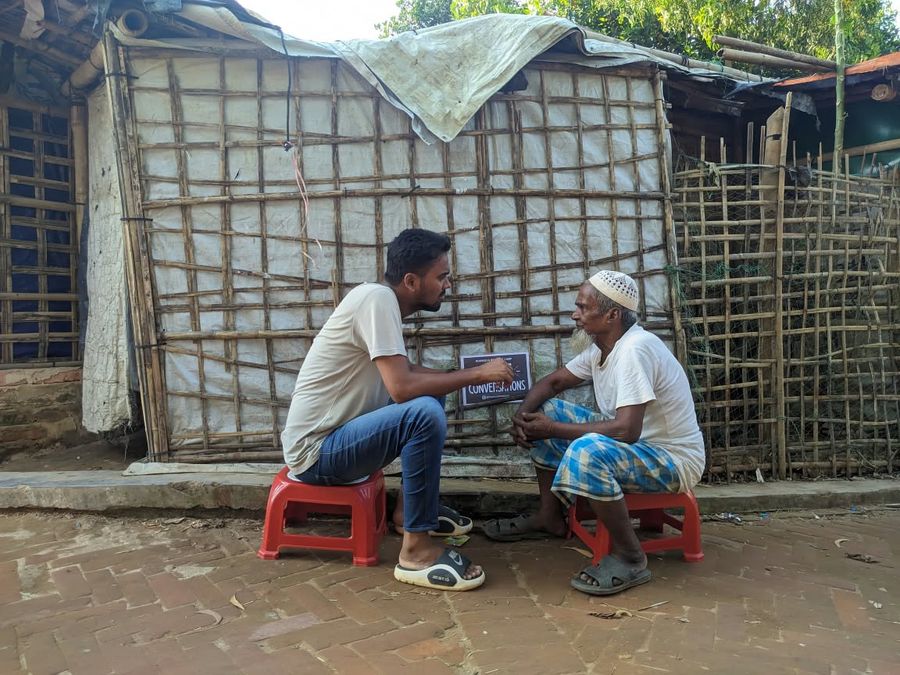
When Habi arrived at the refugee camp in Bangladesh, he saw the difficult conditions in which his wife had been living. Her shelter was made of bamboo and tarpaulin, surrounded by many similar shelters in the crowded camp.
He asked her how she was managing life there. She responded, “Ahh, life…” and explained that she relied on monthly food assistance from the World Food Programme (WFP), worth around US$8. The assistance was not enough to meet all her daily needs.
Habi and his wife also face health challenges. Both live with hypertension and need medical attention. Meeting their basic needs while managing their health has added to the difficulties of their life in the camp.
For Habi, being reunited with his wife was a moment of relief, but their future remained uncertain. They were together again, yet continued to struggle with food, healthcare, and the challenges of daily life.
A Simple Hope: Safety, Dignity, and Home
Habi thanked Allah that he had survived and been reunited with his family.
“I never thought I would be able to come back and meet my family,” he said.
Today, he remains concerned about meeting his and his wife's basic needs. He explained that the food assistance provided by WFP is insufficient and that he cannot afford to buy the fish and meat he would like to eat.
“I don't want a luxurious life. I just want to meet my daily needs and return to my homeland, where I can live safely as I did before 2016,” he said.
After years of imprisonment, separation, and displacement, Habi's wish is straightforward: to live safely with his family, meet their basic needs, and return to his homeland when it is possible to do so safely and with dignity.
His story is not only about a home destroyed, years spent in prison, or a family torn apart. It is also about the long struggle to find his wife again and the hope they continue to hold for a future in which they can live together without fear, with security and dignity.
By Osman Goni (Osman Bin Karim)
Rohingya human rights defender, documentarian, journalist, photographer, and storyteller.
Latest news

AARA Welcomes ICJ Final Judgment Finding Myanmar Military Committed Genocide Against Rohingya
Court orders Myanmar to stop violence, allow safe return, restore rights, pay compensation, and punish perpetrators
Habi Rahman: Nearly Five Years in Prison and a Long Journey to Reunite with His Wife
After nearly five years in prison and years of separation, 69-year-old Habi Rahman reunited with his wife in Bangladesh, carrying memories of loss and hope for a safe return home.

Arakan Army’s Actions Against Rohingya May Amount to Crimes Against Humanity
International human rights lawyer Ashley S. Kinseth argues that the Arakan Army’s restrictions, forced labor, taxation, and land confiscation targeting Rohingya warrant investigation as possible crimes against humanity, including ethnic persecution, and calls for greater international accountability.

AARA Alleges 51 Rohingya Civilians Detained, Elderly Man Killed in Rathedaung Township by Militant Arakan Army (AA)
Rohingya villagers face urgent concerns over a reported deadline imposed by the militant Arakan Army (AA) to leave their homes by October 17, 2026, raising fears of further displacement and loss of shelter.