Special Investigative Report: The 2026 Andaman Sea Tragedy and the Deepening Global Maritime Crisis of the Rohingya
The Rohingya maritime crisis has escalated further with the tragic sinking of the Malaysia-bound vessel Tanjina Sultana near the Andaman Islands on 9 April 2026. The vessel carried an estimated 250–280 passengers, predominantly Rohingya refugees and Bangladeshi nationals fleeing prolonged displacement and insecurity in search of safety and livelihood opportunities. Only nine survivors have been confirmed, with over 270 individuals presumed dead. This tragedy highlights a continuing pattern of preventable maritime disasters driven by forced displacement, human trafficking networks, and the absence of effective regional search-and-rescue and refugee protection mechanisms. It underscores the urgent need for coordinated international action to address the root causes of Rohingya displacement and prevent further loss of life in the Bay of Bengal and Andaman Sea.
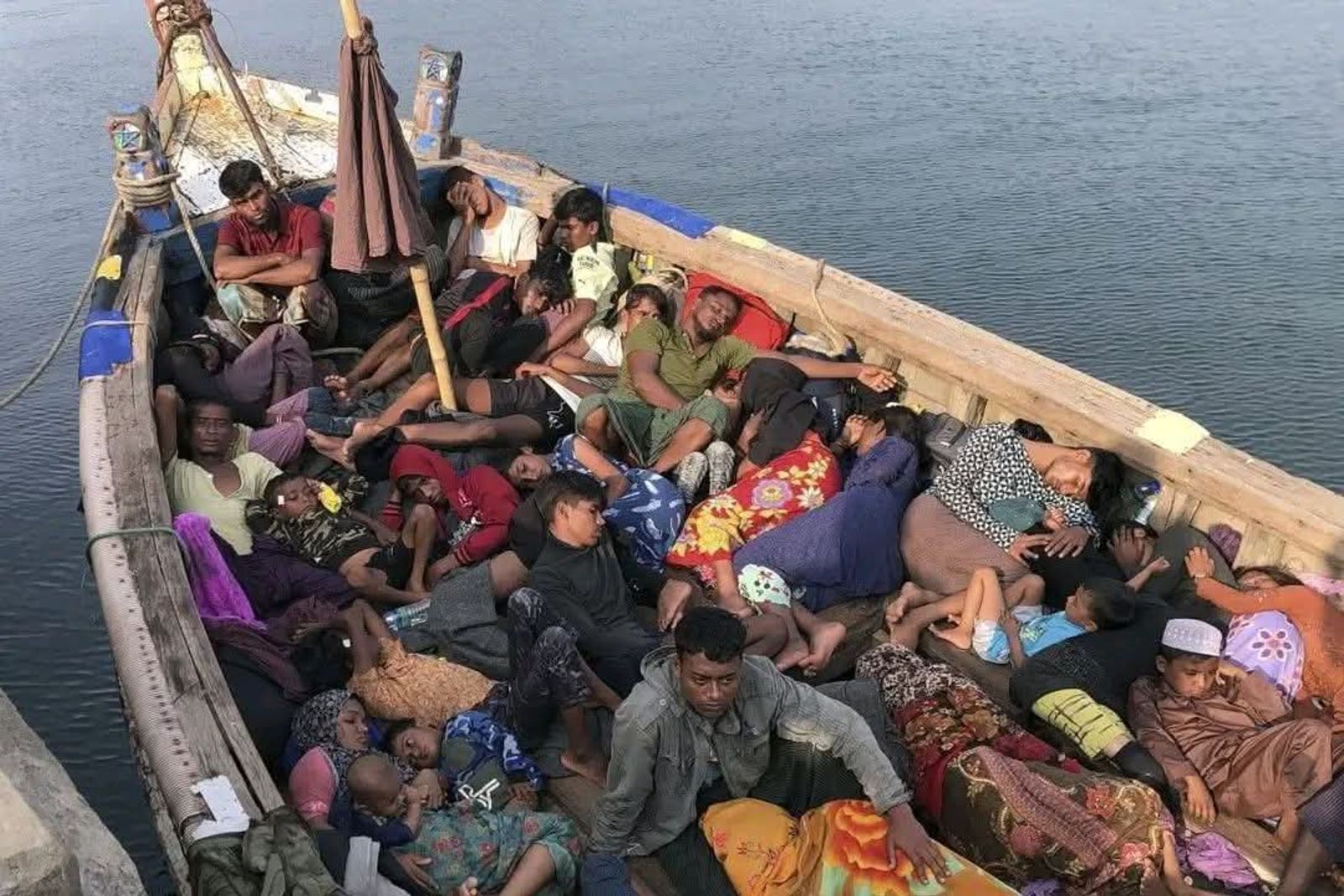
The Rohingya maritime crisis has entered a profoundly alarming and increasingly lethal phase. This report examines the catastrophic sinking of the Malaysia-bound vessel Tanjina Sultana, which capsized near the Andaman Islands on 9 April 2026, resulting in the deaths of an estimated 270 or more passengers. Only nine survivors have been confirmed.
The vessel carried approximately 250–280 individuals, including women and children. The passengers were predominantly Rohingya refugees and Bangladeshi nationals attempting to escape prolonged displacement, insecurity, and deteriorating humanitarian conditions in refugee settlements in Bangladesh, seeking safety and livelihood opportunities elsewhere in the region.
This tragedy is not an isolated maritime accident. It represents a foreseeable and preventable outcome of deep-rooted systemic failures at regional and international levels.
AARA identifies three interlinked drivers behind this disaster:
- Continued persecution, statelessness, and absence of durable solutions for the Rohingya population in Myanmar, making safe return impossible;
- Expansion of transnational human trafficking networks exploiting displaced populations with widespread impunity;
- Absence of coordinated regional maritime protection mechanisms, including effective search-and-rescue operations and responsibility-sharing frameworks.
The sinking of the Tanjina Sultana is therefore part of a broader and worsening humanitarian crisis across the Bay of Bengal and the Andaman Sea. It highlights persistent regional neglect, accountability gaps, and insufficient international engagement toward one of the world’s most persecuted stateless populations.
Without urgent and coordinated action by regional governments, ASEAN member states, the United Nations, and international humanitarian stakeholders, the Andaman Sea risks becoming a recurring site of mass maritime fatalities.
Key Incident Metrics
Vessel Name: Tanjina Sultana
Departure Date: 4 April 2026
Sinking Date: 9 April 2026
Estimated Passengers: 250–280 persons
Women on Board: 21
Children on Board: 4
Confirmed Survivors: 9 (6 Bangladeshi, 3 Rohingya)
Estimated Missing / Presumed Dead: 270+
Rescue Vessel: MT Meghna Pride (Bangladeshi-flagged)
Conclusion
The Tanjina Sultana tragedy underscores an urgent and unresolved global protection failure. It is a stark reminder that without immediate international coordination, strengthened maritime protection systems, and durable political solutions for the Rohingya crisis, such disasters will continue to recur with devastating regularity.
Related articles
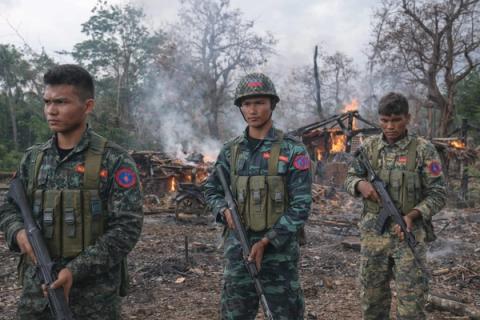
AARA Monthly Situation Report - March 2026: Militarization, Civilian Abuse and Expanding Control in Rakhine State
March 2026 marked a severe escalation of violence and repression in Rakhine State. This report documents widespread airstrikes, village destruction, forced recruitment, arbitrary detention, and increasing restrictions on religious and civilian life, leaving Rohingya communities trapped in deepening insecurity.
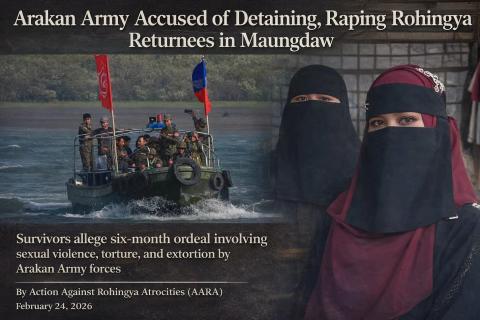
Arakan Army Accused of Raping and Detaining Rohingya Returnees
Dozens of Rohingya families who returned to their homes in Maungdaw Township after the Arakan Army (AA) seized control of the area have endured arbitrary detention, systematic rape, torture, and extortion at the hands of the ethnic armed group, survivors have told.
Latest news

AARA Alleges 51 Rohingya Civilians Detained, Elderly Man Killed in Rathedaung Township by Militant Arakan Army (AA)
Rohingya villagers face urgent concerns over a reported deadline imposed by the militant Arakan Army (AA) to leave their homes by October 17, 2026, raising fears of further displacement and loss of shelter.
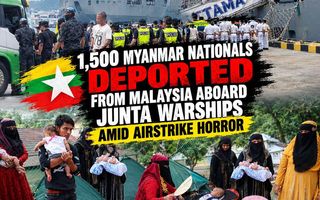
1,500 Myanmar Nationals Deported from Malaysia Aboard Junta Warships Amid Airstrike Horror
Malaysia has begun deporting around 1,500 Myanmar nationals despite ongoing conflict, forced conscription risks, and warnings that safe and dignified return remains impossible.

August 25 and the Hindu Massacre Narrative: How the Arakan Army Is Shifting Blame Toward Rohingya and ARSA
The article examines how the Arakan Army's August 25, 2026 Hindu commemoration presents the 2017 Hindu massacre as an ARSA crime, raising questions over efforts to shift blame onto Rohingya and reshape the history of the Rohingya genocide.