Rohingya Under Siege: Weekly Report on Repression and Human Rights Violations in Rakhine State
This weekly report by Action Against Rohingya Atrocities (AARA) documents major developments affecting Rohingya communities in Rakhine State and across Myanmar from 1 to 8 May 2026. The report highlights arbitrary arrests, religious restrictions, extortion, aerial bombardments, landmine casualties, and targeted arrests of Rohingya refugees in Yangon. It also examines the resumption of Maungdaw–Teknaf border trade and growing administrative controls imposed by the Arakan Army. The findings underscore the continued vulnerability of the Rohingya people and the urgent need for international protection, accountability, and justice.
Executive Summary
This weekly report provides a consolidated overview of major developments affecting the Rohingya community and the broader security and political situation in Rakhine State, Myanmar, during the period of 1–8 May 2026.
During the reporting period, several significant developments were documented. Border trade between Maungdaw and Teknaf resumed after more than a year of suspension, offering limited economic relief to communities on both sides of the border. At the same time, the Arakan Army (AA) continued to impose increasingly restrictive administrative measures on Rohingya communities in Maungdaw Township, including burdensome taxation, restrictions on religious practices, and tighter controls over social gatherings.
In Buthidaung Township, credible allegations emerged of arbitrary detention and extortion involving AA-affiliated officials. The Myanmar military (Tatmadaw) continued to perpetrate serious abuses, including arbitrary arrests, aerial bombardments, and the use of landmines that caused civilian casualties. In Yangon, Rohingya refugees fleeing conflict were reportedly targeted and arrested despite possessing identification documents. Meanwhile, the Bangladesh Navy intercepted smuggling attempts from Bangladesh to Rakhine State.
An interview with Arakan Army Chief of Staff Major General Htun Myat Naing offered insight into the group’s political objectives, regional relationships, and responses to allegations concerning human rights violations.
Overall, the reporting period underscores the continued vulnerability of the Rohingya population, who remain caught between competing armed actors, discriminatory restrictions, and widespread insecurity.
Introduction
Action Against Rohingya Atrocities (AARA) is a Rohingya-led human rights organization committed to documenting and exposing violations against the Rohingya people and advocating for justice, accountability, and the protection of fundamental rights.
This report compiles verified information from local monitors, media sources, and community networks to provide a factual, impartial, and evidence-based account of developments affecting Rohingya communities and the evolving situation in Rakhine State and surrounding regions.
Key Incidents and Developments
1. Resumption of Maungdaw–Teknaf Border Trade
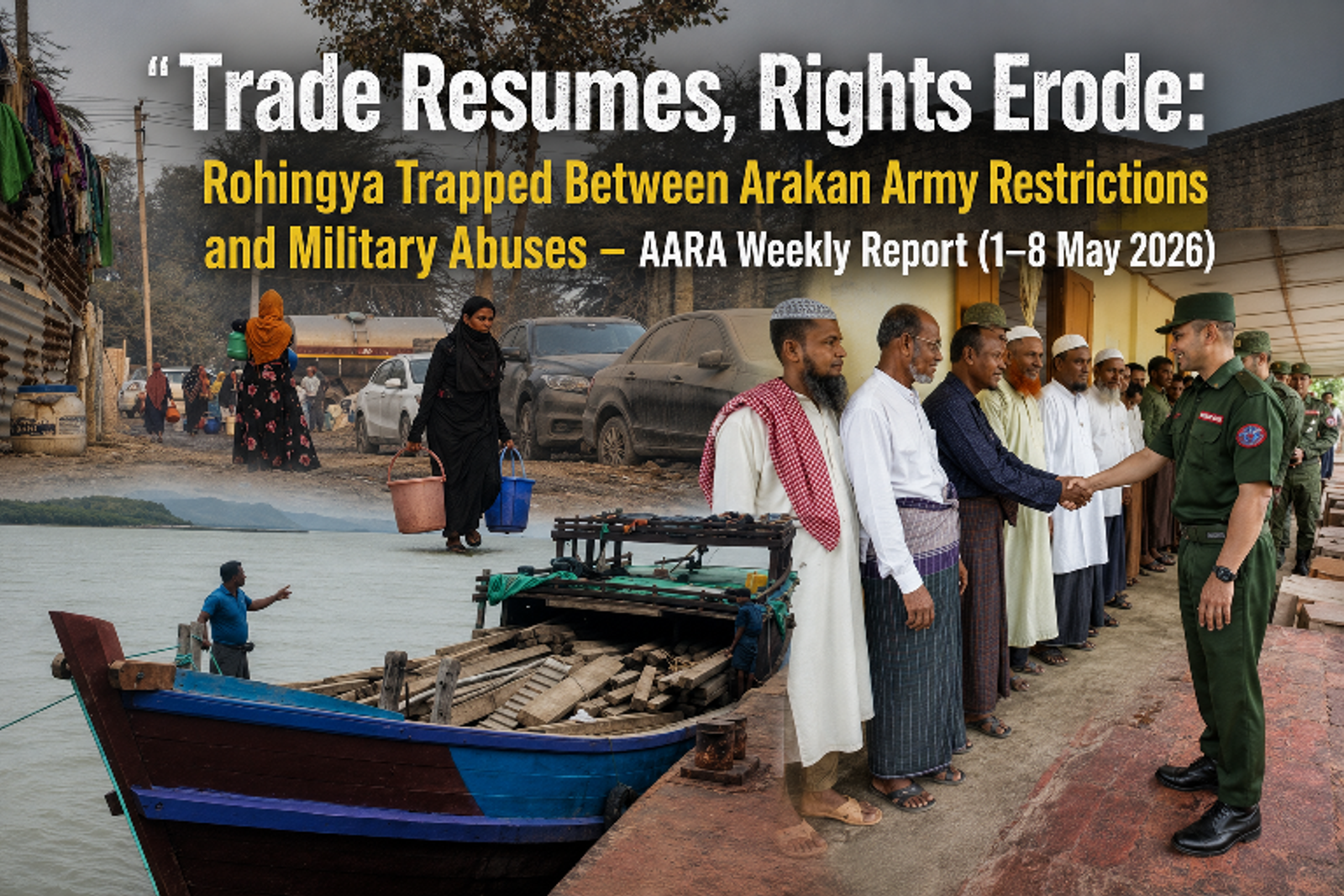
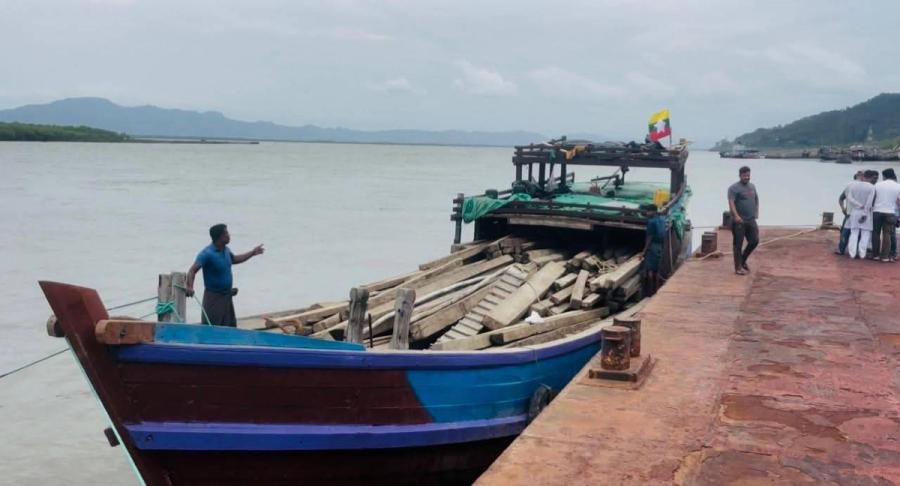
On 1 May 2026, border trade between Maungdaw Township in Rakhine State and Teknaf, Bangladesh, officially resumed after a 13-month suspension.
A timber vessel departed from the Kanyengchaung Economic Zone in Maungdaw and arrived at Teknaf Land Port carrying 963 logs of Champa phul and Garjan timber, valued at approximately USD 16,120.
Bangladeshi officials and local traders welcomed the reopening, expressing hope that legal trade will restore livelihoods, strengthen economic cooperation, and generate much-needed revenue.
2. Arakan Army Restrictions on Rohingya Communities in Maungdaw
a. Increased Market Taxes
Shopkeepers in Maungdaw Ward No. 2 reported severe financial pressure due to heightened market taxes imposed by the Arakan Army.
Businesses are reportedly required to pay:
- 120,000 kyats annually in shop taxes; and
- Up to 1,000 kyats daily in market fees.
These demands persist despite declining commercial activity and reduced purchasing power among residents.
b. Ban on Loudspeakers for the Adhan
Since 27 April 2026, AA authorities have prohibited mosques in Maungdaw from using loudspeakers to broadcast the adhan (Islamic call to prayer).
Community members view this measure as a direct infringement on freedom of religion or belief.
c. Restrictions on Religious and Social Gatherings
Beginning in May 2026, the AA introduced additional controls over religious and social events in Maungdaw Township.
Under the new regulations:
- Applications must be submitted at least five days in advance;
- Events must conclude by 10:00 PM; and
- New construction projects require prior authorization.
Residents fear these directives will further erode religious liberty, social cohesion, and community autonomy.
3. Alleged Arbitrary Detention and Extortion in Buthidaung
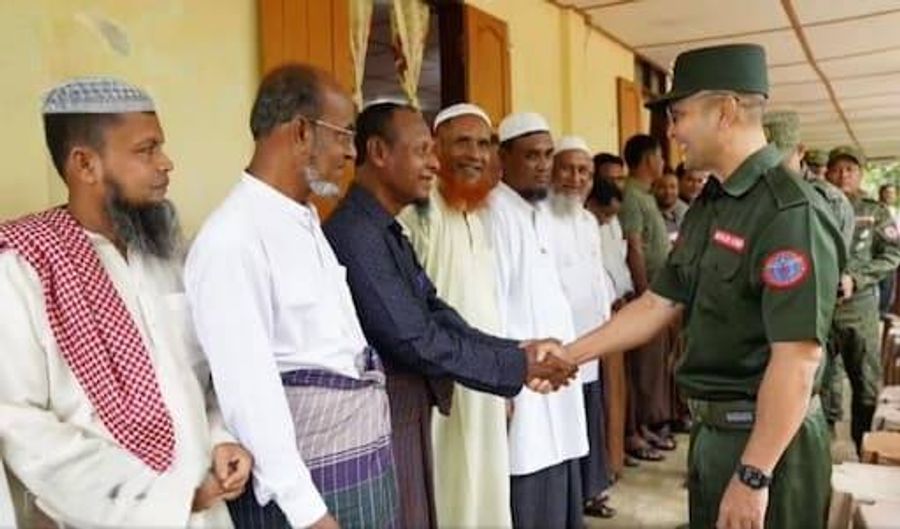
On 30 April 2026, AA forces reportedly arrested seven Rohingya civilians in Buthidaung Township.
Families alleged that village administrator Elias and AA/ULA intelligence member Mamat Saw Lim demanded 1 million kyats per detainee in exchange for release.
Although some families reportedly paid the requested sums, the detainees remained in custody as of 2 May 2026.
These allegations raise serious concerns regarding arbitrary detention, corruption, and abuse of authority.
4. Myanmar Military Actions and Human Rights Violations
a. Arrest of Rohingya in Ayeyarwady Region
On 5 May 2026, Myanmar military forces arrested 12 Rohingya, including minors, near Thae Phyu Village in Tharpaung Township, Ayeyarwady Region.
b. Aerial Bombardments in Minbya Township
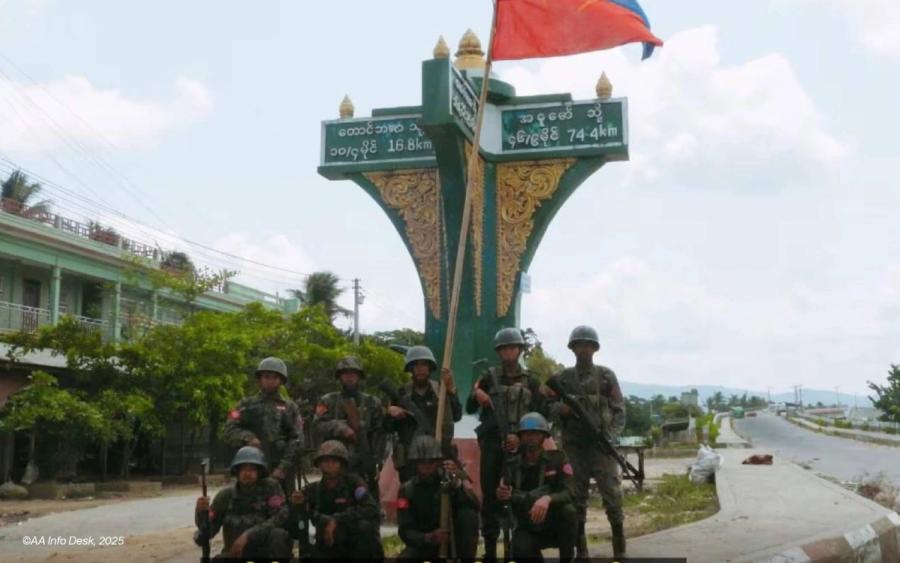
On 7 May 2026, the Myanmar military launched aerial attacks involving five fighter jets near Kyauk Khat Village and Thit Phut Mountain in Minbya Township.
The bombardment continued for more than one hour.
c. Landmine Casualties in Sittwe
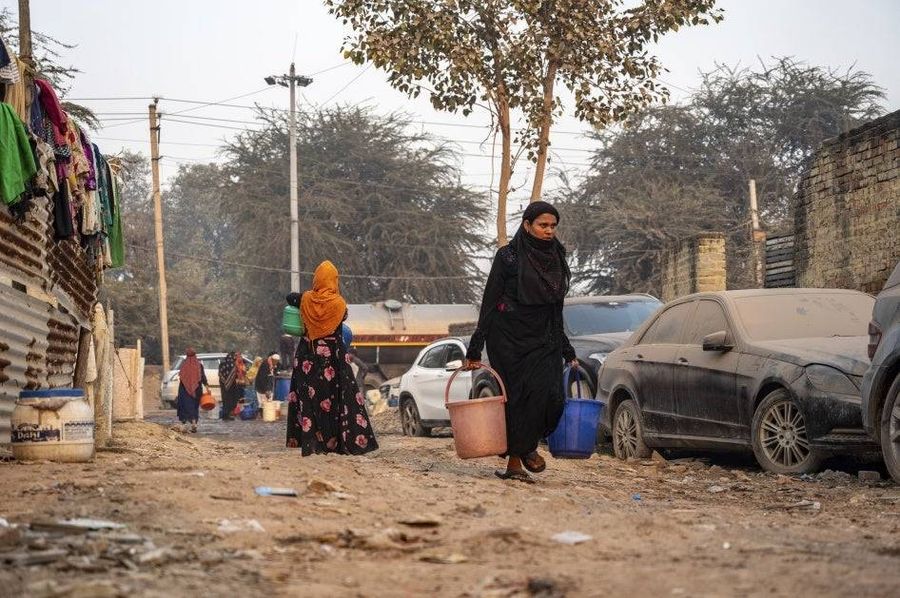
On 29 April 2026, a 10-year-old Muslim girl from Ohn Taw Gyi Village lost her leg after stepping on a landmine reportedly planted by the Myanmar military.
A similar incident occurred on 17 April 2026, when a 45-year-old Rohingya man lost his leg in the Dah Paing Muslim IDP camp.
d. Targeted Arrests of Rohingya Refugees in Yangon
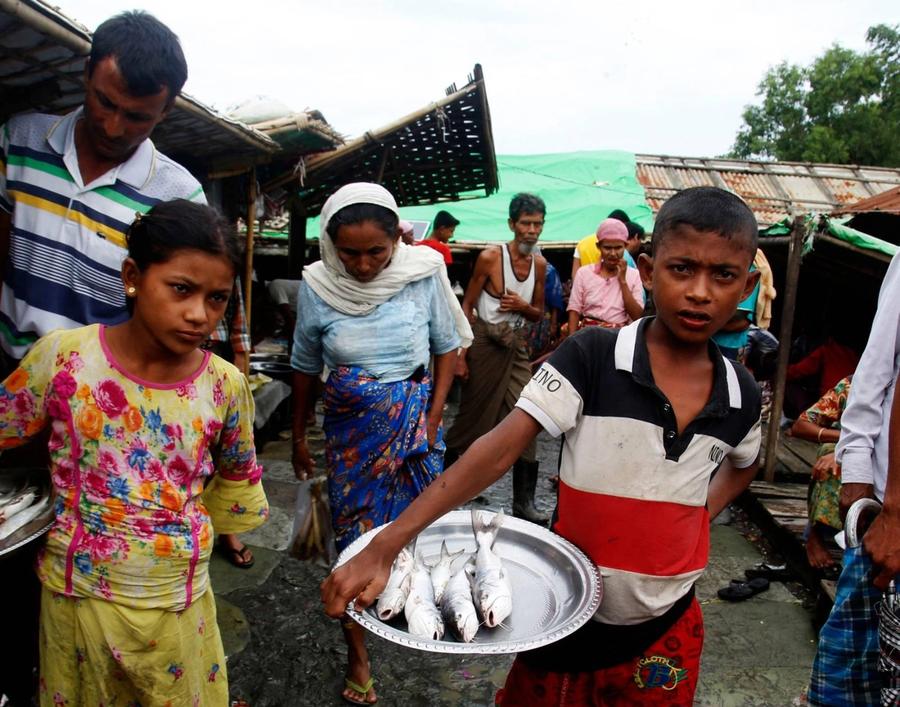
On 2 May 2026, approximately 50 Rohingya refugees, including teachers and young people displaced from Buthidaung and Maungdaw, were reportedly arrested in Nwe Aye Ward, Dawbon Township, Yangon.
The incident reflects ongoing anti-Rohingya discrimination and the heightened vulnerability of displaced Rohingya throughout Myanmar.
5. Bangladesh Navy Intercepts Smuggling Attempts
On 5 and 6 May 2026, the Bangladesh Navy arrested 13 individuals in two separate operations near St. Martin’s Island and Shapari Island.
The suspects were allegedly attempting to smuggle foreign liquor and food items from Bangladesh into Rakhine State.
6. Interview with Arakan Army Chief of Staff Major General Htun Myat Naing
In an interview with The Diplomat, aired on 4 May 2026, Major General Htun Myat Naing discussed several key issues.
Military Position and Public Support
He stated that the AA now controls approximately 90 percent of Rakhine State.
Dialogue with the Myanmar Military
He argued that substantive negotiations are impossible while the junta continues airstrikes against civilians.
Regional Relations
He expressed willingness to cooperate with:
- Bangladesh on border trade and refugee return;
- India on the Kaladan Multi-Modal Transit Project; and
- China on maintaining regional stability.
Human Rights Allegations
He denied allegations of systematic forced recruitment.
Vision for the Future
He announced plans to establish medical colleges and nursing schools in Rakhine State.
Analysis
The reporting period reveals a deeply concerning pattern in which Rohingya civilians continue to face systemic abuses from multiple actors.
While the reopening of border trade may provide modest economic benefits, the humanitarian and human rights situation remains dire. The Arakan Army’s increasingly intrusive restrictions on religious practice, social life, and economic activity, together with allegations of extortion and arbitrary detention, raise serious concerns regarding governance, accountability, and respect for fundamental rights.
Simultaneously, the Myanmar military continues to commit grave violations, including indiscriminate attacks, arbitrary arrests, and the use of landmines in civilian areas.
The cumulative effect is a pervasive environment of fear, insecurity, and deprivation.
Conclusion
Between 1 and 8 May 2026, Rohingya communities in Rakhine State and elsewhere in Myanmar faced continued repression, insecurity, and discrimination.
Although the reopening of the Maungdaw–Teknaf border trade offers limited economic opportunity, this development is overshadowed by restrictive measures imposed by the Arakan Army, allegations of extortion and arbitrary detention, and ongoing military attacks by the Myanmar junta.
The interview with AA leadership suggests a desire for political legitimacy and regional engagement. However, documented actions on the ground indicate a troubling gap between these statements and the lived realities of Rohingya civilians.
AARA reiterates the urgent need for:
- Independent monitoring of conditions in Rakhine State;
- Protection of Rohingya civilians and their fundamental rights;
- Accountability for all perpetrators of human rights violations; and
- Sustained international engagement to ensure justice, safe return, and durable solutions for the Rohingya people.
Related articles
AARA Weekly Situation Report
During the reporting period, Action Against Rohingya Atrocities (AARA) documented multiple serious abuses committed by the Arakan Army (AA) against Rohingya civilians in northern Maungdaw and Buthidaung Townships, including landmine injuries, forced labour, forced removal of residential fences, extrajudicial killings, destruction of homes, arbitrary arrest, and the forced displacement of vulnerable civilians. These incidents reflect an escalating pattern of systematic abuse, intimidation, and collective punishment targeting the Rohingya population in Arakan State. AARA urges the international community to take immediate action to investigate these violations and protect Rohingya civilians from further atrocities.
Comprehensive Documentation Report: Systematic Violence and Atrocities in Arakan (Rakhine) State (2012 to 2025)
"Summary of AARA Comprehensive Report (2012–2025/2024)" This report documents a sustained pattern of mass violence, destruction, and severe human rights violations in Arakan (Rakhine) State from 2012 to 2025, with Rohingya civilians as the most affected population. From the 2012 Rakhine State riots through subsequent waves of violence, communities have experienced "killing, displacement, village burnings, arbitrary arrests, sexual violence, and loss of livelihoods". The crisis escalated further in 2013–2014 through land confiscations, coordinated raids, and the destruction of entire villages. The 2017 military operations marked one of the most devastating phases, with large-scale massacres in villages including Tula Toli, Gu Dar Pyin, Kyaukpyin, and Inn Din. Thousands of civilians were killed, mass graves were reported, and survivors described systematic and organized attacks involving security forces and armed groups. More recent incidents in 2024–2025 indicate continued violence, including alleged Arakan Army operations involving drone strikes, executions, mass killings, and attacks on civilians attempting to flee. Major incidents include Hoyyar Siri, Nga Kyi Dauk, and the Naf River massacre. Highlighted Groups Most in Need Across all documented incidents, the following groups remain the most severely affected and in urgent need of protection and assistance: 1. Rohingya Civilian Population Primary victims of repeated mass killings and displacement Systematic loss of homes, land, and identity documents Long-term statelessness and restricted freedom of movement 2. Women and Girls Reported survivors of sexual violence and gender-based abuse High vulnerability during village raids and mass attacks Long-term psychological trauma and lack of protection services 3. Children Victims of killings, burnings, and forced displacement Orphaned and separated from families in multiple incidents Severe disruption of education and development 4. Elderly Persons Frequently killed or abandoned during forced displacement Unable to flee during attacks on villages High risk of neglect and lack of humanitarian access 5. Persons with Disabilities Left behind during mass evacuations and attacks Limited access to humanitarian aid and protection Extremely high vulnerability during armed operations 6. Displaced Families and Refugees Living in unstable conditions inside Myanmar and across borders Facing food insecurity, lack of shelter, and limited healthcare Continuous fear of renewed attacks and forced movement Conclusion The report highlights an ongoing humanitarian crisis where civilians—especially Rohingya men, women, children, the elderly, and persons with disabilities remain at extreme risk. Immediate protection, humanitarian access, and international accountability are urgently needed to prevent further loss of life and long-term suffering.
Special Weekly Report: Escalating Atrocities and Humanitarian Catastrophe in Arakan (Rakhine) State
Action Against Rohingya Atrocities (AARA) presents its Special Weekly Report (April 10–17, 2026), documenting a sharp escalation of violence and persecution against the Rohingya in Arakan (Rakhine) State. The report highlights credible evidence of mass killings, forced labor, economic exploitation, and severe humanitarian deterioration driven by aid cuts and movement restrictions. During the reporting period, new incidents further exposed patterns of abuse, including the shooting and arrest of a Rohingya religious teacher in northern Maungdaw and the release of 63 detainees from Buthidaung prison in extremely poor physical condition, indicating torture and ill-treatment. These developments reinforce concerns over systematic human rights violations and potential breaches of international humanitarian law. AARA calls for urgent international action, including expanded investigations, targeted sanctions, and immediate humanitarian support to protect the Rohingya population and ensure accountability.
Latest news

AARA Alleges 51 Rohingya Civilians Detained, Elderly Man Killed in Rathedaung Township by Militant Arakan Army (AA)
Rohingya villagers face urgent concerns over a reported deadline imposed by the militant Arakan Army (AA) to leave their homes by October 17, 2026, raising fears of further displacement and loss of shelter.
1,500 Myanmar Nationals Deported from Malaysia Aboard Junta Warships Amid Airstrike Horror
Malaysia has begun deporting around 1,500 Myanmar nationals despite ongoing conflict, forced conscription risks, and warnings that safe and dignified return remains impossible.
August 25 and the Hindu Massacre Narrative: How the Arakan Army Is Shifting Blame Toward Rohingya and ARSA
The article examines how the Arakan Army's August 25, 2026 Hindu commemoration presents the 2017 Hindu massacre as an ARSA crime, raising questions over efforts to shift blame onto Rohingya and reshape the history of the Rohingya genocide.